
A strong search strategy only gets you halfway. The other half is knowing whether it is working, and being able to prove it. SEO reporting is the scoreboard. But too many reports still hand over a spreadsheet of keyword positions, when what a board actually wants to know is simpler: did this make us money?
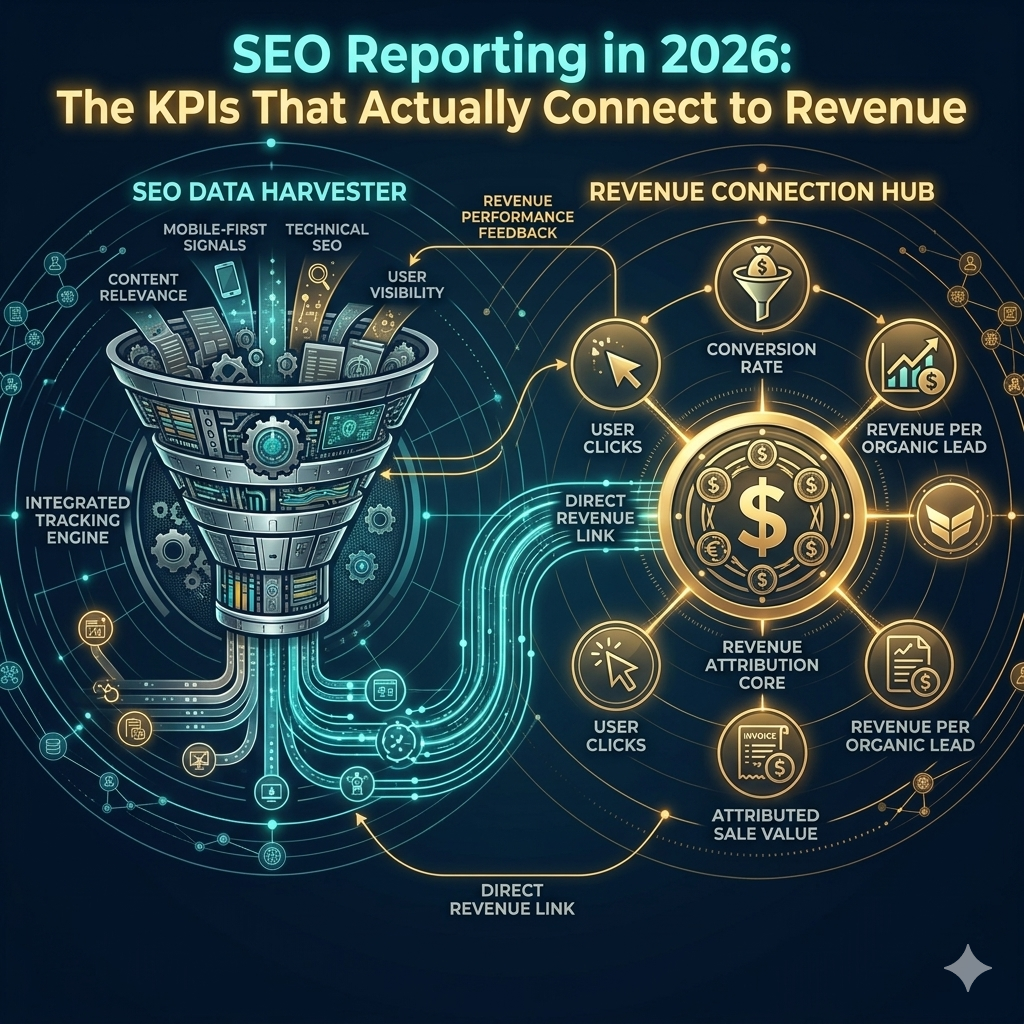
In an era where customers find brands through Google, AI answer engines, and generative search alike, reporting has to do more than track rankings. It has to connect search performance to commercial outcomes. Here is how to measure what matters.
A successful search strategy spans technical health, content systems, link authority, and AI visibility. Without clear reporting, you can't tell what's driving results, or defend the investment when budgets tighten.
Good reporting lets you:
This is the shift from a keyword spreadsheet to a commercial intelligence view of search, the difference between reporting activity and reporting impact.
The number of visitors arriving through search. A steady rise signals improving visibility, but treat it as an input, not the goal.
Your positions for target terms, tracked in Google Search Console, Semrush, or Ahrefs. Still useful, but no longer the full story now that AI answers sit above the rankings.
The newest and increasingly essential metric: how often AI engines like ChatGPT, Perplexity, and Google's AI Overviews reference your brand, and whether they describe it accurately. AI citation rate is fast becoming a KPI every brand needs on the dashboard.
The share of searchers who click after seeing you. A low CTR often means your titles and descriptions need sharpening, or that an AI summary is answering the query before users reach you.
How visitors behave once they arrive. High bounce can flag a mismatch between intent and content, or a poor experience.
Speed and stability have been confirmed ranking factors since 2018, and they shape conversions too. Watch them continuously, as minor performance drift erodes rankings quietly.
The share of visitors who take the action that matters, purchase, lead, sign-up. This is where SEO meets the bottom line.
Domain authority predicts ranking likelihood, but increasingly it is entity authority, how clearly the web defines who your brand is, that determines whether AI engines trust and cite you.
Total links, their quality, and referring domains. Pair this KPI with a regular backlink audit to keep authority clean.
The point of SEO reporting is not a tidy spreadsheet. It is a clear line from search activity to revenue, across traditional rankings, AI visibility, and conversions. That is the kind of reporting we build for clients as standard.
If your current reports leave you guessing whether SEO is paying off, book a Discovery and Search Growth Blueprint and we'll show you what a revenue-connected view of search looks like for your business. Prefer to start smaller? Run our free AI Visibility Checker first.

