
You have built a great website, but the customers aren't arriving. The reason is almost always the same: you are invisible at the moment people search. And "search" no longer means just Google. It means Google's traditional results, AI answer engines like ChatGPT and Perplexity, and the generative summaries that increasingly sit above the old blue links.
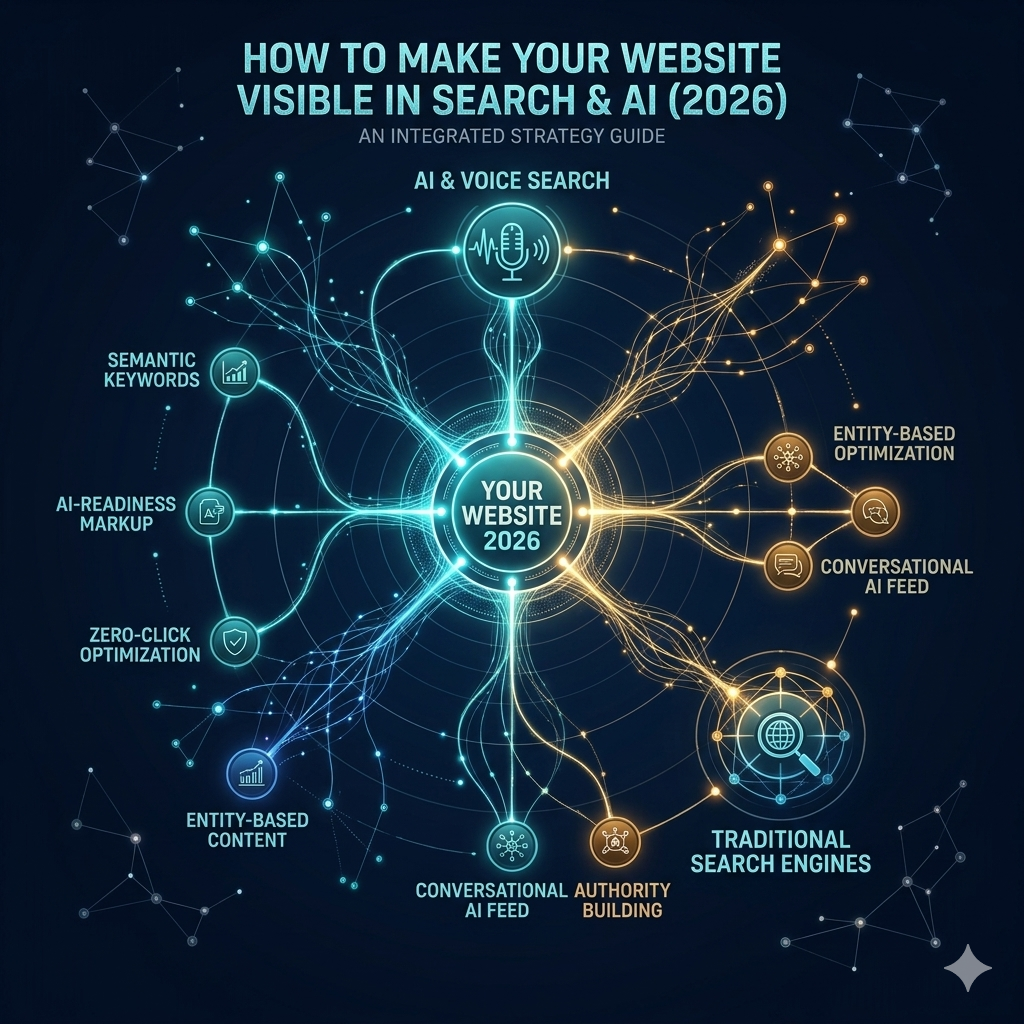
The good news is that the fundamentals of being found still apply, they just have to work harder, across more surfaces. Here are eight ways to give your site the visibility it deserves.
If your site is new, it may not appear at all yet. Search site:yourdomain.com to check what Google has indexed.
Note that crawlability for AI engines is its own discipline now, getting indexed by Google is no longer the finish line.
Short-tail keywords are broad and high-volume; long-tail keywords are specific and closer to a buying decision. Both still matter, but in the AI era, the bigger win is answering complete questions clearly, because that is exactly what answer engines extract and cite. Build content into connected topic hubs rather than scattered one-off posts, and use Google Analytics to see what your audience actually searches for.
Every page needs a clear title tag and meta description with relevant keywords. Add descriptive alt text to images. Crucially, add schema markup so both Google and AI engines can understand precisely what each page is about, as structured data is now one of the strongest signals for being correctly represented in AI answers.
Build them the right way: create genuinely useful content, maintain a real presence, and earn relevant placements. Never buy links from low-quality sites, it is a black-hat tactic that damages rankings and erodes trust. If you are unsure what your current profile looks like, start with a backlink audit.
Speed affects rankings, conversions, and user trust:
Then keep watching, as performance quietly degrades over time, and small Core Web Vitals slips cost rankings before anyone notices.
Most searches now happen on mobile, and Google prioritises mobile-friendly sites in its mobile-first index. Check how your site performs on PageSpeed Insights, use responsive design, and keep mobile pages clean, as intrusive pop-ups and oversized images slow loading and get penalised.
Most agencies still optimise for Google alone. The brands pulling ahead are visible everywhere their customers make decisions, traditional search, AI answer engines, and generative results, through one unified strategy.
That is exactly what our SEO, AEO and GEO service delivers. Want to know where you stand right now, including how often AI engines surface your brand? Run our free AI Visibility Checker, or contact us to talk it through.

