
AI turns dispersed customer feedback into near-real-time, prioritised insight by automating transcription, tagging and root-cause detection across every channel. This means faster detection of emerging issues, deeper diagnosis of why customers feel the way they do and automation of the manual tagging work that used to consume analyst hours. None of this replaces judgement: governance and measurement remain the steps that decide whether a voice of customer AI programme delivers value or simply produces noise at scale.
Voice of customer programmes have always pulled from a mix of sources: support tickets, call transcripts, survey verbatims, social mentions, app store reviews and structured ratings. The data shapes differ wildly. A star rating is a single number. A call transcript is thousands of words of unstructured speech, often with crosstalk, hesitation and regional phrasing. A survey comment might be a single sentence or a paragraph of frustration. AI in this context means applying a stack of specific techniques to each of these shapes rather than forcing everything through one blunt instrument.
Speech-to-text models convert call and video feedback into searchable transcripts, which then become inputs for the same text-based pipeline as written feedback. Natural language processing (NLP) extracts entities, intents and sentiment from that text. Topic modelling clusters thousands of comments into themes without a human having to read each one first. Summarisation condenses long verbatims or entire clusters into a paragraph a product manager can act on in under a minute. Generative explanation, typically from a large language model, goes a step further and can articulate why a cluster of feedback is negative, not just that it is negative.
The choice between a large language model and a simpler classifier is not binary, and it matters more than most procurement conversations suggest. Research comparing traditional machine learning classifiers with a pre-trained large language model found that LLMs outperform traditional classifiers on longer, context-rich text and produce more explainable sentiment outputs, which matters when a team needs to understand the reasoning behind a classification rather than just the label. A related comparison in the same research area notes that simpler models remain efficient for short, concise feedback, while LLMs earn their cost on longer, nuanced text where context and tone shift within a single comment.
In practice, a mature VoC AI stack tends to combine:
Getting this mix wrong is the most common early mistake: using an LLM for every single short comment multiplies cost and latency without improving accuracy, while relying purely on a simple classifier for long-form call transcripts throws away the nuance that makes the feedback valuable in the first place.
The building blocks matter less than what they produce. A VoC AI system earns its budget through four categories of output that change how teams actually work day to day.
Automated ingestion and normalisation is the unglamorous foundation. Feedback arrives from support platforms, review sites, survey tools, social listening feeds and call centre systems, each with its own format, metadata and update frequency. Normalising this into one structure, with consistent timestamps, channel tags and customer identifiers where permissible, is what makes everything downstream possible. Without it, analysts spend most of their time reconciling spreadsheets rather than reading feedback.
Emergent trend and anomaly detection is where AI earns the “near-real-time” claim most directly. Instead of waiting for a monthly report to reveal that complaints about a specific feature have tripled, a well-configured system flags the spike within hours of it starting to form. This matters most during product launches, policy changes or service disruptions, when the cost of a slow response compounds daily.
Driver and root-cause extraction goes beyond flagging that sentiment has dropped and attempts to explain why. Text analytics research into customer experience reviews found that sentiment patterns in free text often diverge from numeric star ratings, meaning a business relying solely on CSAT or NPS scores can miss the specific operational issue driving dissatisfaction. A customer who rates an experience three stars but writes two paragraphs about a billing error is giving far more diagnostic value in the text than in the number, and root-cause extraction is the mechanism that surfaces that pattern across thousands of similar comments rather than one at a time.
Generative summaries and one-click actions close the loop for frontline staff who do not have time to read raw verbatims. A support team lead can receive a daily digest: three sentences summarising the top emerging issue, the number of customers affected, and a suggested action, with a link through to the underlying tickets for anyone who wants to verify the summary before acting on it.
Four things to prioritise when deciding what to automate first:
Pro Tip: Start by automating the tagging and routing of feedback your team already reads manually. The accuracy gains from automated anomaly detection are only as good as the tagging pipeline feeding them.
Three areas tend to show the clearest return from voice of customer AI, each with a distinct mechanism and a distinct type of evidence behind it.
That third finding deserves a second look because it cuts against a common assumption in reputation management. Teams often assume customers are scrutinising word choice and warmth in a brand’s public replies. The research instead points to responsiveness itself, the simple fact that someone or something replied, as the dominant driver of perceived attentiveness. For a VoC programme stretched thin across channels, that is a genuinely useful piece of prioritisation guidance: coverage and speed of response beat perfecting the wording of each one.
Not every platform marketed as an AI-powered VoC tool delivers the same operational value, and the differences tend to show up in a handful of specific capabilities rather than in headline claims.
Procurement teams often weight the headline analytics capability most heavily and treat explainability and audit logging as secondary. That ordering tends to reverse within the first year of use, once a flagged decision needs to be defended to a regulator, a customer, or an internal fairness review, and the system cannot show its reasoning.
A VoC AI rollout that works tends to follow a deliberate sequence rather than a single big-bang deployment, and governance steps are woven through the sequence rather than bolted on at the end.
Pro Tip: Treat the DPIA as a working document rather than a compliance formality to file away. Revisit it whenever the model, data sources or use case changes materially, since a DPIA written for a pilot rarely covers what the system does once scaled.
Our own view on human sign-off within AI-assisted work, explored in more detail here, is relevant well beyond content production: any system that acts on customers’ words needs a point where a trained person can stop, question and override the machine’s conclusion.
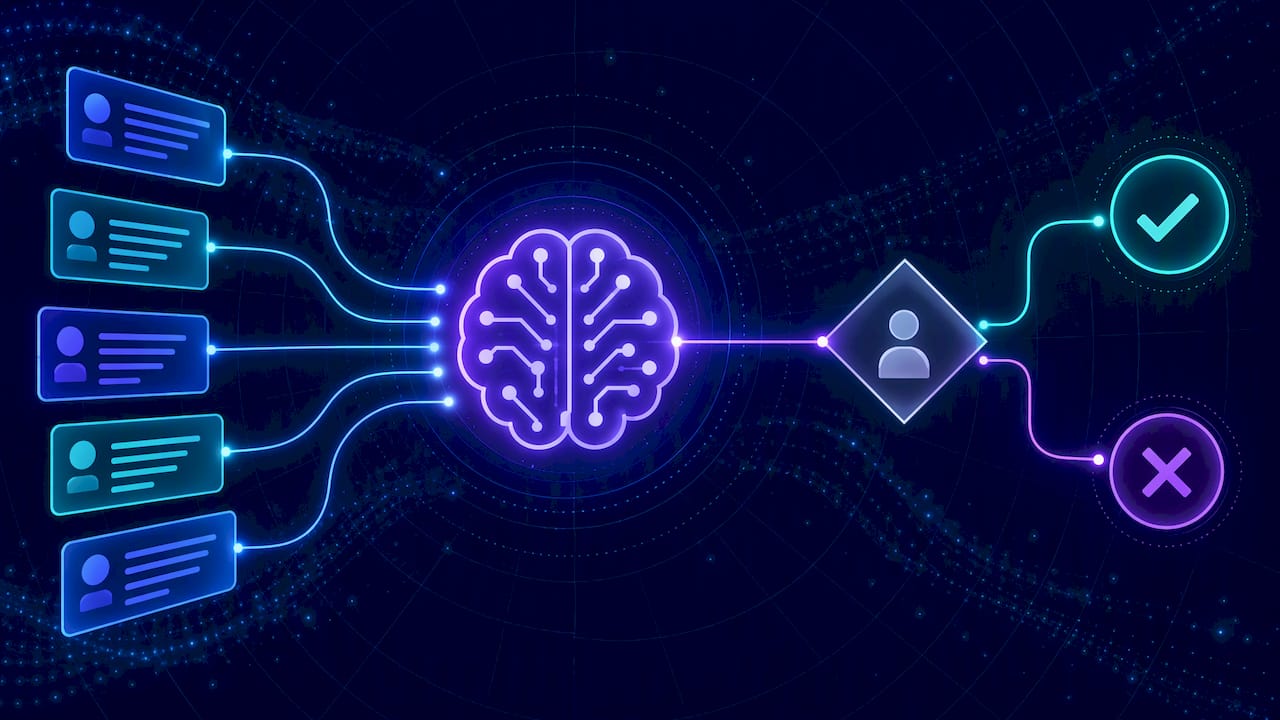
Measurement for a VoC AI programme should span three layers: whether the system is working technically, whether customer experience is actually shifting, and whether that shift is worth what the programme costs.
Operational KPIs tell you whether the plumbing works. Time-to-insight measures how long it takes feedback to turn into a flagged issue someone can act on. Tagging coverage measures what proportion of incoming feedback the system classifies with sufficient confidence versus what falls through to manual review. Alert precision and recall measure whether the anomaly detection is catching real issues without drowning the team in false positives.
Experience KPIs connect the system to the customer relationship itself: shifts in the specific drivers behind NPS or CSAT scores, rather than just the headline number, and measurable improvement in review sentiment over time. Because text sentiment often diverges from numeric ratings, tracking both in parallel gives a more complete picture than either alone.
Commercial KPIs are what justify the budget line to a finance team: reduction in churn among customers flagged as at-risk by sentiment signals, lower escalation costs from catching issues before they reach a formal complaint, and measurable time savings from automating tagging work that previously consumed analyst hours.
For attribution, three approaches cover most situations:
None of these require a data science team the size of a tech company’s. A modest pilot with a clearly defined control group, tracked for eight to twelve weeks, is usually enough to tell whether the investment is paying off.
The risks in voice of customer AI cluster around four areas, and none of them are hypothetical.
Reviewer behaviour is the control that keeps meaningful human review meaningful: ICO guidance recommends tracking override rates and review outcomes as part of accountable AI governance, since a review process with no visibility into how often reviewers actually intervene cannot demonstrate that the review is doing anything.
We treat voice of customer signals as one input into a wider growth system rather than a standalone report that sits in a folder. Our five-phase Growth Engine, running from AI-powered intelligence through a strategic blueprint, AI-amplified execution, human-led optimisation and measurable commercial outcomes, uses customer feedback patterns to inform where a no-code and low-code AI solutions content, campaign or conversion change is likely to matter most. Our approach to AI in client work keeps senior strategists in the loop at every phase rather than letting a model’s output pass straight through to a client deliverable unchecked.
Cross-client intelligence, drawn from patterns across multiple engagements, can provide benchmarks for what a meaningful sentiment or satisfaction shift looks like in a given sector, rather than treating every movement in the data as equally significant. Readers who want to see how this methodology is structured in full can review the Growth Engine in detail.
Reading customer feedback clearly is only half the problem. The harder, more valuable half is turning what that feedback reveals into changes across a website, a campaign, a product description or a lifecycle email sequence, consistently enough that the improvements compound rather than evaporate after one fix. That is the gap we built our services to close: we combine AI-powered research and strategic planning with senior-led execution across search, paid media, conversion rate optimisation, branding and web development, so insight from customer feedback does not stop at a dashboard.
For a business that wants a structured starting point, our Search Growth Blueprint sets out a 90-day plan for translating research, including customer feedback signals, into a prioritised set of commercial actions.
If your team has the feedback but not the capacity to act on it systematically, a discovery conversation about our Blueprint is the natural next step.
There is no single recognised “30% rule” for AI with a fixed, universal definition, and we have not found a primary source establishing one. In practice, teams sometimes use informal thresholds like this to decide when a model’s confidence score is too low for automated action and a human reviewer should step in instead.
In Six Sigma, Voice of the Customer (VOC) refers to the structured process of capturing customer requirements and translating them into measurable specifications that a process improvement project can target. It feeds directly into tools like the Define phase of DMAIC, where customer needs are converted into critical-to-quality characteristics the project then measures and improves.
AI is being built into CRM platforms as an added capability, such as automated tagging, sentiment scoring and predictive alerts, rather than replacing the CRM as a system of record for customer relationships. The CRM remains the place where customer data lives; AI changes how quickly and thoroughly that data gets analysed and acted on.
No. Voice of customer programmes are not being phased out, they are being restructured around AI tools that process far more feedback, far faster, than manual review ever could. The shift is from periodic, sample-based listening towards near-continuous, AI-assisted monitoring across every channel a customer uses.
A narrow, well-scoped pilot focused on one business decision, such as faster escalation of urgent support tickets, can typically show measurable operational results, like reduced time-to-insight or alert accuracy, within a matter of weeks. Experience and commercial KPIs, such as shifts in churn or satisfaction scores, generally take longer to confirm because they need a large enough sample of customer behaviour to be statistically meaningful.

