
A keyword map assigns each keyword cluster to exactly one URL on your site. That single rule, one cluster per URL, is the foundation of every well-structured site. Get it right and you eliminate cannibalisation, give crawlers a clear signal, and stop wasting content budget on pages that compete with each other.
Two-step quick start:
Three immediate checks before you go further:
A keyword map is only as useful as the decisions it records: one cluster per URL, intent-first assignment, and a quarterly review cycle are the three non-negotiable foundations.
Your 30–90 day sprint plan:
Review cadence reminder: quarterly as a baseline, plus trigger-based checks after algorithm updates, site migrations, and content sprints. The map owner is responsible for keeping every row current.
| Point | Details |
|---|---|
| One cluster, one URL | Assign each keyword cluster to exactly one URL to prevent cannibalisation and dilution. |
| Intent before volume | Match the page type to the query intent first; volume is a secondary ranking criterion. |
| Template columns | Record primary keyword, variations, volume, KD, TP, intent, URL, status, owner, and last updated for every row. |
| Quarterly review cycle | Review the full map every quarter and after any major algorithm update, migration, or content sprint. |
| Viaductgen’s approach | Viaductgen combines AI-assisted clustering with senior strategist review to keep maps commercially aligned, not just semantically accurate. |
Keyword mapping is the process of assigning keyword clusters to specific pages so that every URL on your site has a clear, deliberate topical focus. It differs from raw keyword research in one important way: research produces a list; mapping produces a decision. You are not just finding terms, you are deciding which page owns each term and why.
The practical benefits are concrete:
A quick UK example. Suppose you run a B2B software site and you have a pillar page targeting “project management software for agencies.” A new post targeting “best project management tools UK” looks like a separate opportunity. Run the SERP overlap test first. If the same URLs dominate both SERPs, the new post will cannibalise the pillar. The right move is to add a UK-focused section to the pillar, not publish a competing page.
Pro Tip: *Before creating any new page, paste both the existing pillar’s primary keyword and the proposed new keyword into a search engine and compare the top 10 results.
A map is only worth maintaining if it produces measurable results. The KPIs to track are:
For quarterly reporting, a simple measurement checklist works well:
At three months, you should see ranking consolidation on previously cannibalised clusters. At six months, organic impressions on pillar pages typically grow as cluster pages build topical authority around them. At twelve months, the map becomes a strategic asset: a record of every content decision, every gap filled, and every collision resolved, which is the kind of evidence that justifies SEO investment to stakeholders who want more than a rankings screenshot.
Backlinko’s keyword mapping workflow outlines a practical sequence that holds up well in practice. Here is an adapted version for UK teams.
Gather your keyword list and page inventory. Export all queries from GSC (last 12 months, all countries, then filter to GB). Pull keyword exports from your research tool of choice. List every existing URL in a separate sheet tab. You now have two inputs: what Google already associates with your site, and what you want it to associate.
Cluster by intent using SERP overlap. Group keywords that return largely the same top-10 results into a single cluster. Ahrefs recommends using parent-topic metrics, specifically traffic potential and keyword difficulty, to identify which term in a cluster should be the primary keyword. The term with the highest traffic potential is usually the one to optimise for, even if it is not the highest-volume term in isolation.
Select the best URL for each cluster. For each cluster, ask: does an existing page already rank for any term in this cluster? If yes, that page is almost always the right assignment. Check its backlink profile and content depth. If the existing page is thin, mark it “to optimise.” If no page exists, mark the cluster “to create.”
Fill the map columns. Every row in the map should record: primary keyword, secondary variations, monthly volume, keyword difficulty (KD), traffic potential (TP), intent type, target URL, page type (pillar or cluster), status, owner, and last updated date. A sample row is in the template section below.
Publish or update, then close the loop. Once a page is published or optimised, update the map row status to “live” and record the date. Set a calendar reminder for a quarterly review. The map is only useful if it reflects the current state of the site.
Tool guidance by step:
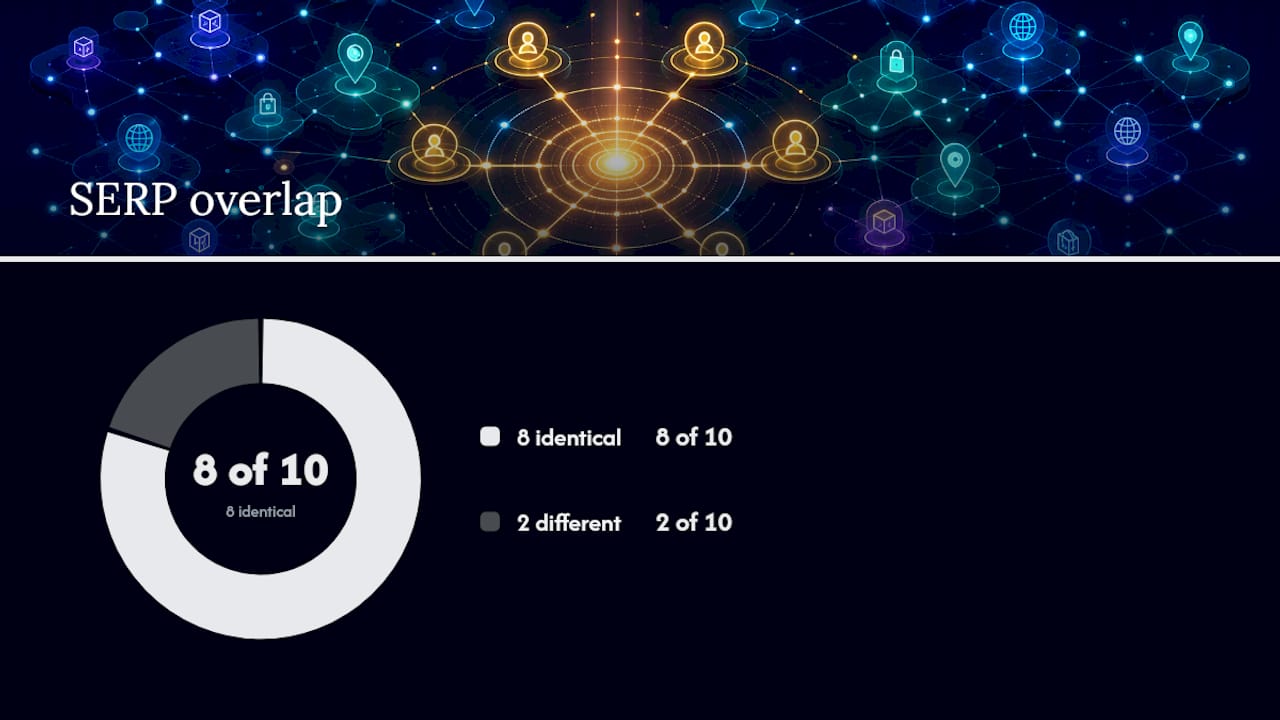
Mini example. You have a cluster around “content audit template” (primary, 1,600 monthly searches UK) and a separate cluster around “how to audit website content” (900 searches). SERP overlap is high: 8 of the top 10 results are identical. Both clusters should map to the same pillar page. Splitting them into two pages would create a cannibalisation collision from day one.
A well-structured keyword mapping template should be copyable into Google Sheets or exported as a CSV. The columns below cover every decision a team needs to make and record.
Sample row (UK-localised):
Template setup tips:
As Semrush notes, the map should be treated as a living document, updated whenever a page is published, redirected, or restructured, not just at the start of a project.
The decision is rarely about which page you prefer. It is about which page the SERP already prefers and whether that preference aligns with your intent.
WordStream’s intent-driven mapping guidance frames this well: the intent of the query must match the intent of the page. A transactional cluster should not land on an informational blog post, regardless of how well that post ranks today.
Decision checklist for URL assignment:
When to merge vs when to create:
Cannibalisation triage, four steps:
OrganicSEO’s keyword allocation framework describes this as a four-pass remediation process, and the principle is consistent: one cluster, one URL, no exceptions. For teams building hub and spoke content architecture, the map is the document that makes the architecture real rather than theoretical.
The map is not just a planning document. It is the brief for every page you publish or update. Once a URL is assigned to a cluster, the map tells you exactly what the page needs to contain and which other pages it should link to.
On-page checklist for each assigned URL:
Internal link plan example. Suppose your pillar page is “content marketing strategy” and three cluster pages cover “content audit template,” “content calendar template,” and “content brief template.” Each cluster page should link back to the pillar using anchor text that reflects the pillar’s primary keyword (“content marketing strategy guide” rather than “click here”). The pillar should link to each cluster page using the cluster’s primary keyword as anchor text. This creates a closed loop that reinforces the topical authority of the pillar without creating confusing or competing anchor signals.
Pro Tip: Never use the same anchor text to link to two different URLs. If “content audit template” always points to /blog/content-audit-template/, that anchor text becomes a reliable signal. Vary the phrasing for secondary links to the same page, but keep the primary anchor consistent.
The map’s Keyword Variations column is particularly useful here. Secondary terms that appear in that column should appear in H2 subheadings or body copy, not just in the primary keyword field. This is how a single page covers a cluster rather than a single query, which is what intent-driven on-page optimisation requires.
The map should be reviewed on a quarterly baseline cadence, with additional trigger-based checks after major site changes or algorithm updates. A map that is not updated is worse than no map at all, because it gives the team false confidence that assignments are current when they are not.
Quarterly review checklist:
Trigger-based review events:
Roles and responsibilities:
| Role | Responsibility |
|---|---|
| Map owner | Maintains the master sheet, approves structural changes, runs quarterly reviews |
| Reviewer | Checks SERP shifts and cannibalisation flags, proposes reassignments |
| Implementer | Publishes or updates pages, updates status and last-updated fields |
Review cadence summary:
| Frequency | Trigger | Owner | Action |
|---|---|---|---|
| Quarterly | Calendar-based | Map owner | Full audit: new pages, SERP shifts, cannibalisation check |
| Ad hoc | Algorithm update | Reviewer | SERP shift check for affected clusters |
| Ad hoc | Site migration | Map owner | Full URL reassignment review |
| Ad hoc | Content sprint | Implementer | Add new rows, assign clusters, update status |
Each stage of the mapping workflow has a natural tool fit. The list below maps the tool to the task, not the other way around.
UK localisation notes. Always filter keyword data to GB before recording volumes in the map. UK search behaviour differs from US behaviour on commercial queries: terms like “solicitor” rather than “attorney,” “estate agent” rather than “realtor,” and “VAT” rather than “sales tax” are not just spelling differences; they represent distinct search clusters. Use UK-specific modifiers (“near me,” city names, “UK,” “England”) where local intent is relevant. Currency in the map should be recorded in pounds sterling (£) for any commercial or transactional cluster where pricing is a ranking signal.
For teams exploring AI-augmented discovery methods, advanced keyword discovery approaches cover how to scale cluster identification beyond what manual SERP checks can handle.
The most common failure mode for keyword maps is not a bad template. It is a template that gets built once and never touched again. Viaductgen’s approach treats the map as an operational system, not a deliverable.
The workflow combines AI-assisted clustering with senior strategist review at each sprint boundary. Clustering runs automatically against GSC and position tracking exports; a strategist then reviews the output for intent accuracy and business priority before any assignment is confirmed. This matters because AI clustering tools group by semantic similarity, not by commercial value. A cluster of informational queries might look identical to a commercial cluster in a similarity matrix but require a completely different page type and conversion path.
A keyword map built without intent review is just a list of keywords in a spreadsheet. The map becomes a growth asset when every row reflects a deliberate decision about what the business wants to rank for, on which page, and why. That decision requires human judgement at the cluster level, even when the clustering itself is automated.
Automation pointers for AI-augmented teams:
What still requires human judgement:
For teams interested in how AI-driven mapping scales across a full site architecture, Viaductgen’s AI-in-client-work approach describes the five-phase Growth Engine that underpins this workflow. The AI visibility checker is also useful for identifying which mapped pages are currently surfacing in AI-generated search results, a signal that is increasingly relevant as query fan-out from generative search grows.
Most SEO teams build a keyword map once, file it away, and wonder six months later why cannibalisation is back. The map is only as good as the process around it.
Viaductgen’s SEO service includes keyword mapping as a core deliverable within a 90-day sprint, not as a standalone document. The difference is that the map is connected to the site’s full content architecture, its internal link graph, its GSC data, and its commercial targets from day one. Senior strategists review every cluster assignment for intent accuracy and business priority. AI handles the clustering and monitoring at scale; humans make the calls that matter.
For mid-market and scale-up businesses that need a map built correctly and maintained operationally, rather than a spreadsheet that gathers dust, the Viaductgen growth system is the practical next step. To see how the five-phase Growth Engine applies to your site’s specific architecture and keyword inventory, explore the approach or get in touch directly.
The template schema in the mapping template section above is designed to be copied directly into Google Sheets. For smaller teams (one to three people), the Backlinko and WordStream guides are the most accessible starting points. For larger teams or agencies managing multiple sites, the Semrush and Ahrefs guides offer the depth needed to handle complex architectures and large keyword inventories.
A keyword map is a document that assigns each keyword cluster to a specific URL on your site, ensuring every page has a clear topical focus and preventing multiple pages from competing for the same queries.
The four intent types are informational (the searcher wants to learn), commercial investigation (comparing options before buying), transactional (ready to act or purchase), and navigational (looking for a specific brand or page). Intent type determines which page type a cluster should be assigned to.
Google Search Console exports all queries your site already receives impressions for at no cost. Google Keyword Planner provides seed volume data with UK-specific location filtering, also free with a Google Ads account.
A keyword map is typically a spreadsheet with one row per keyword cluster. Each row records the primary keyword, secondary variations, monthly search volume, keyword difficulty, intent type, the target URL, page status, and the date it was last reviewed.
Review the map quarterly as a baseline, and run additional checks after any algorithm update, site migration, or significant content publishing sprint. The map owner should update the Status and Last Updated fields every time a page is published or restructured.

